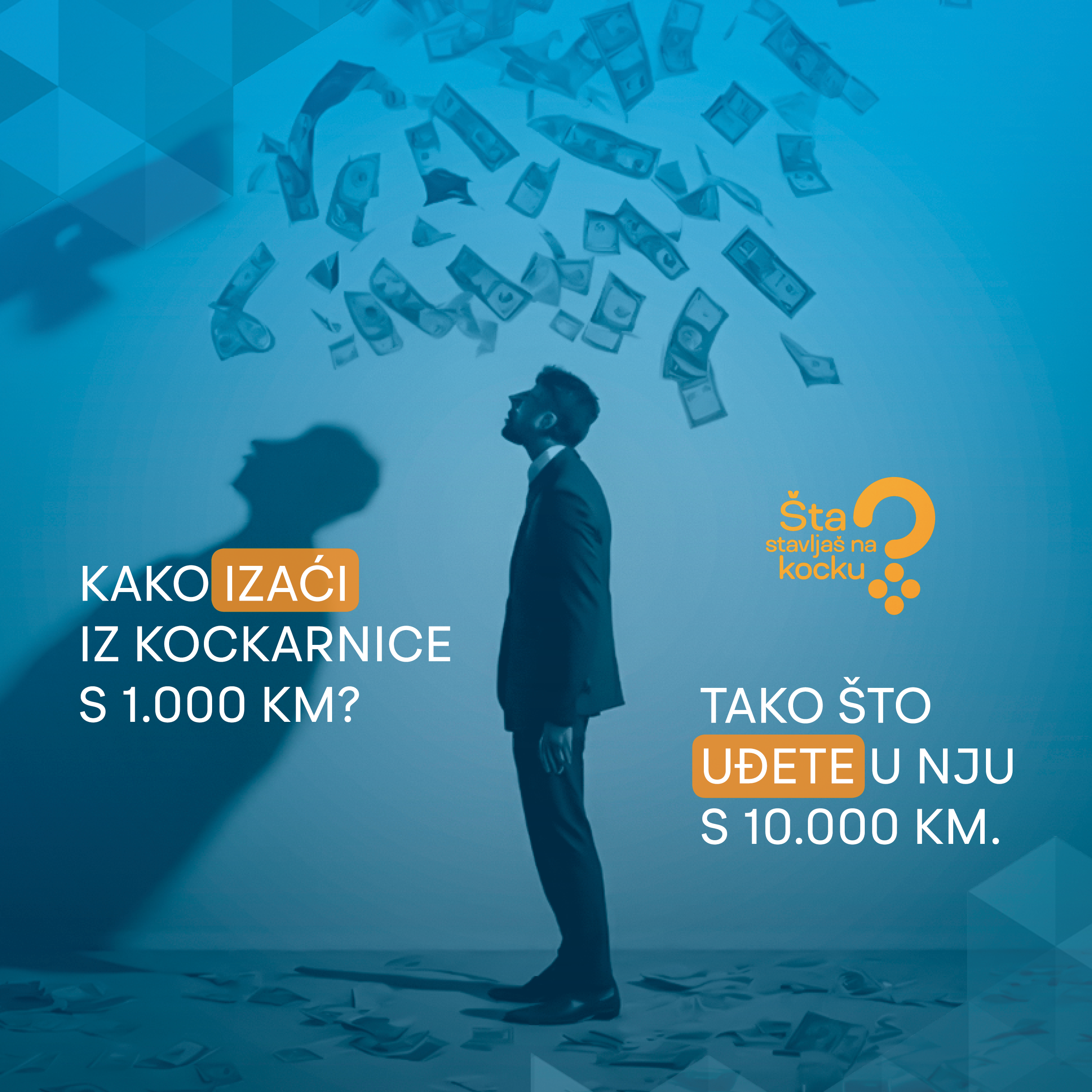


A possible explanation is that when people are unable to earn the required amount of money in a short period of time, they resort to what they consider easier ways of making money — namely, gambling.
People who engage in gambling believe that there is a low risk and a high chance of winning. However, excessive gambling can cost a person a great deal of money.
From time to time, a person who gambles may win, but it is important to know that the odds are always against them. Gambling organizers make a profit. If everyone who gambled were constantly winning, no casino would survive in the market.
In 2022 alone, citizens of the Federation of Bosnia and Herzegovina spent over 1.7 billion BAM in betting shops.
However, (excessive) gambling is not just a financial issue.
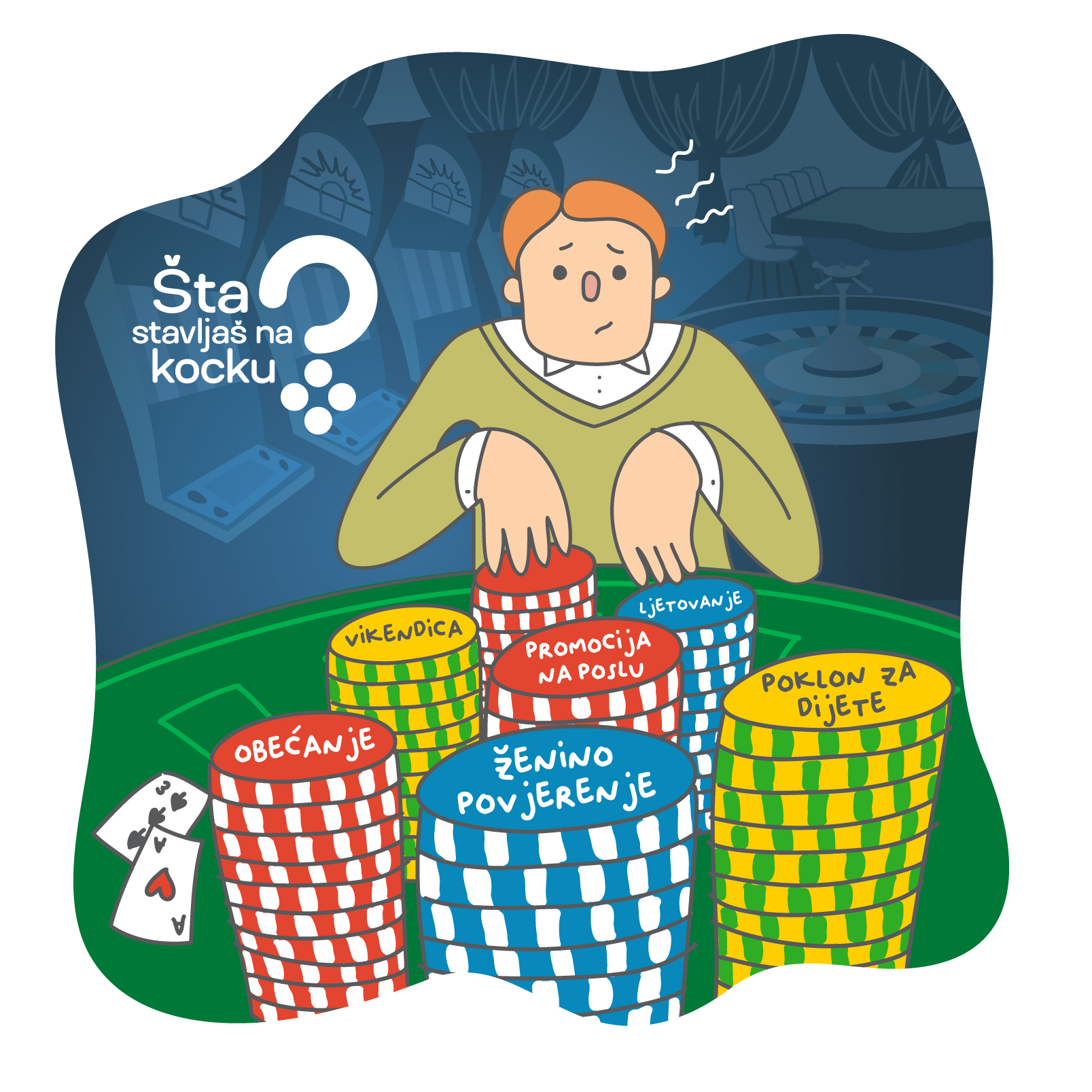
If gambling becomes a problem, it can affect:
work/career
familly
physical and mental health
relationship with others
feelings about oneself
quality of life
satisfaction with life
standard of living and performance
In families where one or both parents gamble, there is a higher likelihood that the child will also gamble.
Gambling can lead to a loss of interest in other activities. Missing school or work due to gambling affects one’s career or chances of getting a good job.
Gambling also affects personality, causing mood changes and problems in social functioning and interpersonal relationships.
Gambling can also affect a person’s health, causing (or leading to):
problems regarded to sleep
anxiety
stress
depression
rage epiusodes
suicidal thoughts
suicide attempts
Also, since gambling is illegal for minors, they can get into serious trouble with the law.
It has been shown that a person with a gambling problem affects the lives of eight people around them.