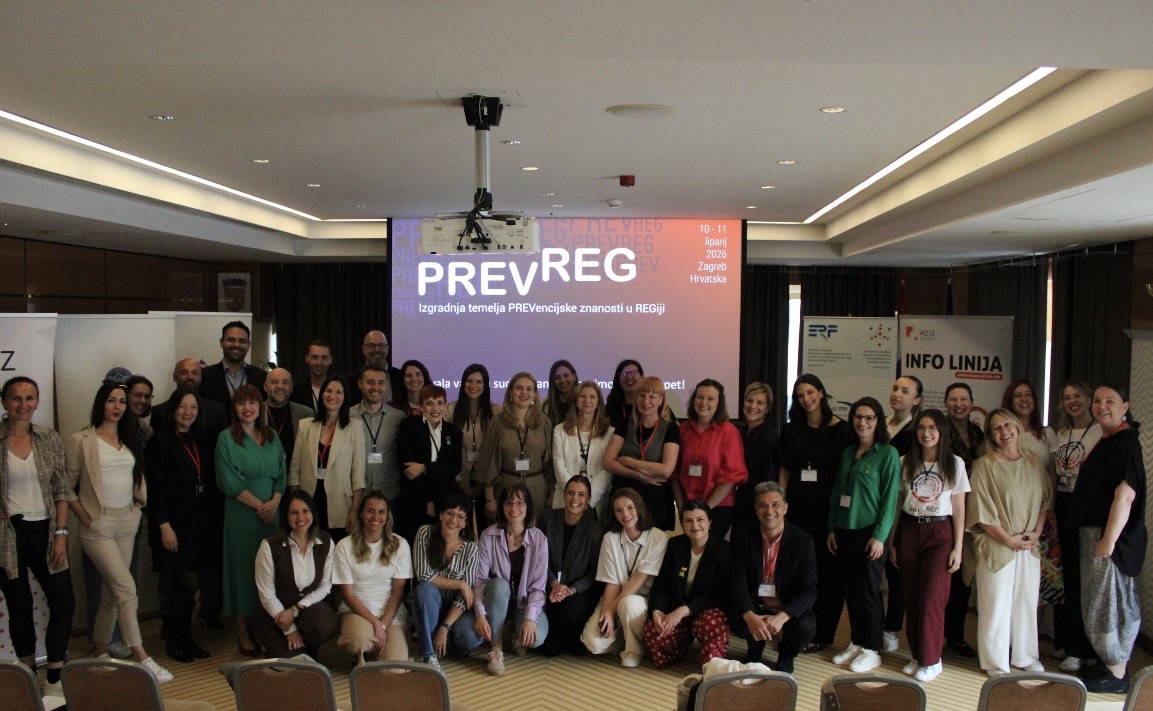


The 1st Regional Conference on Building the Foundations of PREVention Science in the REGion was held in Zagreb on 10 and 11 June 2026. Two intensive days of work, experts and practitioners from six countries across the region, and one shared message: preventing behavioural problems among children and young people must be grounded in science, not merely goodwill.
A Regional Network That Has Long Been Missing
The conference brought together researchers, practitioners and policymakers from Croatia, Bosnia and Herzegovina, Serbia, Slovenia, Montenegro and North Macedonia. For the first time, the professional community from across the region gathered with the aim of mapping the state of prevention science, exchanging experiences and laying the foundations for long-term cooperation. In addition to the hosts, the Faculty of Education and Rehabilitation Sciences, University of Zagreb, and the Prevention Research Laboratory (PrevLab), the conference was supported by the Croatian Institute of Public Health, the Addiction Prevention Competence Centre from Bosnia and Herzegovina, and the European Union Drugs Agency (EUDA), giving the event a distinctly European dimension.
A Strong Programme Featuring International Speakers
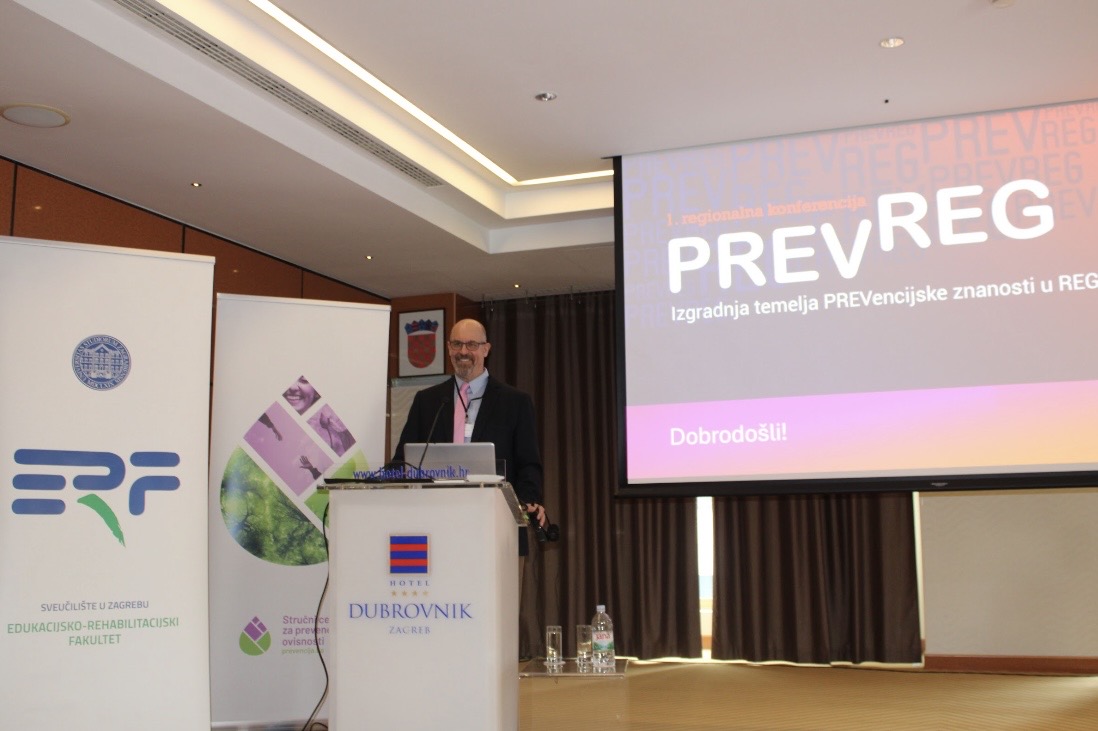
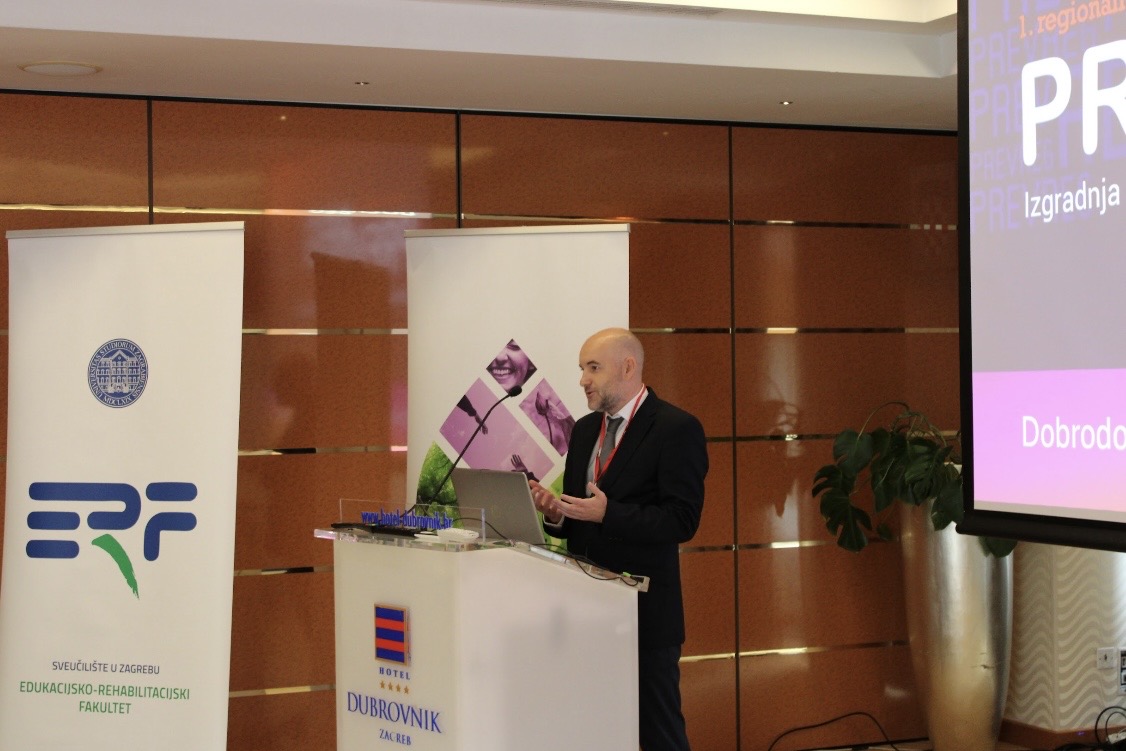
The conference opened on the first day with an address by Željko Petković, Deputy Director for Addiction Affairs at the Croatian Institute of Public Health, who presented Croatia’s strategic and programme policies on addiction. The event was further enriched by a plenary lecture delivered by Dr Angelina Brotherhood from the Addiction Competence Centre at the Austrian National Public Health Institute in Vienna, who delivered a clear message: the region can no longer afford prevention programmes that are not evidence-based. Her message was both a challenge and a call to action. Invited presentations also played an important role, with a representative from each country providing a brief overview of the development of prevention science in their respective national contexts.
The second day of the conference featured a lecture by Professor Doug Coatsworth from the Department of Social Work at the University of Tennessee, USA. His presentation addressed a key issue facing practitioners throughout the region: having a good programme is not enough; how it is implemented and how well it fits the local context are equally important. This is a message that resonates with anyone who has ever attempted to implement a ready-made model in a different setting. Dr Ana Kozina from the Educational Research Institute in Slovenia presented research on social and emotional competencies in schools, emphasising the role of diversity and inclusion as foundations for healthy relationships in educational environments.
Poster Presentations
Alongside plenary and invited lectures, the conference also featured guided poster presentations, giving researchers and practitioners the opportunity to showcase specific projects and research findings. This format created space for exchanging ideas, asking follow-up questions and establishing future collaborations.
What Comes Next?
After years of work, projects, publications and interventions, the time has come to assess what has proven effective and what needs to change. Researchers from all six countries jointly mapped the achievements to date, creating, for the first time, a shared regional research inventory.
On the final day, the programme concluded with a session dedicated to political and systemic frameworks for prevention. Representatives from each country presented the state of prevention within their respective legal, strategic and institutional frameworks, identifying gaps that need to be addressed to ensure that effective programmes become embedded in systems rather than remaining isolated projects. During the closing panel and in the conference conclusions, a clear vision was articulated: PREVREG is not a one-off event. Its goal is to build a lasting regional cooperation network that will continuously promote the application of scientific knowledge in prevention science and public health policies, facilitate the exchange of good practices and advance contemporary standards of prevention science across all countries in the region.
The conference demonstrated that knowledge, commitment and capacity exist in each of the six countries. What had been missing was a platform to bring them together. PREVREG has created that platform.