

Adults spend a significant portion of their lives at the workplace – nearly one third of their time – and the health and safety of employees are key elements of every successful work environment. However, various factors and stressful situations can increase vulnerability to the use of psychoactive substances (such as alcohol, nicotine, cannabis, etc.) or the development of behavioural addictions (e.g., gambling, betting, pornography). This negatively affects not only the individual who develops problematic behaviour, but also the entire work environment and beyond.
Substance misuse can lead to numerous negative consequences for employees: absenteeism, lateness, fatigue, job loss, illness, and increased healthcare costs. In addition, the presence of psychoactive substances in the workplace negatively impacts safety, increases stress levels, and worsens interpersonal relationships and overall morale – both for those who use substances and for those who do not.
Although no profession is insignificant, this situation is particularly concerning in occupations where employees are responsible for the health and safety of others, as the use of psychoactive substances in such cases can have serious, even life-threatening consequences.
According to estimates, between 5% and 20% of the working population in Europe experience serious problems related to alcohol or drug use. Such problems increase the risk of workplace injuries, incidents, impaired work ethics, and can lead to reduced productivity, lower quality of services, and work-related errors.
The causes of alcohol or drug use at work are often linked to occupational, social, and personal factors. Occupational factors include physically demanding and unpleasant working conditions (cold environments, prolonged standing, extreme effort), job dissatisfaction, irregular working hours, and shift work. Social factors include limited support from colleagues, restricted decision-making autonomy, and stressful working conditions. Employees in high-pressure and competitive environments sometimes resort to various substances to enhance cognitive performance and increase work efficiency.
Prevention in the workplace is just as important as in any other life setting. Organizations, institutions, and companies should invest in the health and well-being of their employees. Research shows that the return on investment in occupational safety and health is approximately double for employers.
In addition to health benefits, there are strong economic reasons for maintaining high levels of worker protection. The costs of work-related accidents and illnesses to the EU economy amount to more than 3.3% of GDP annually – around €460 billion (2019 estimate). Although the true cost to human well-being is immeasurable, good practice in occupational safety and health contributes to greater productivity, competitiveness, and organizational sustainability.
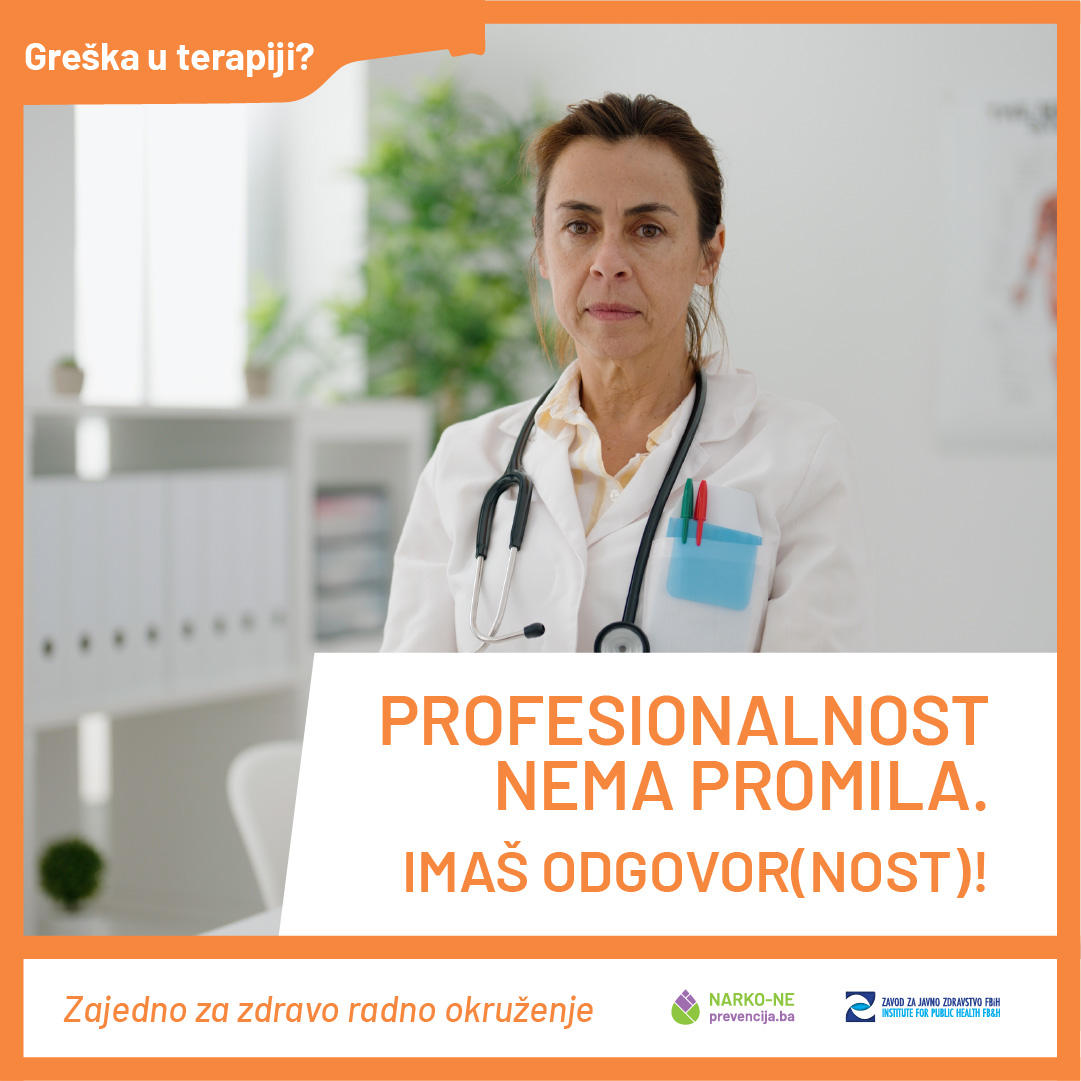
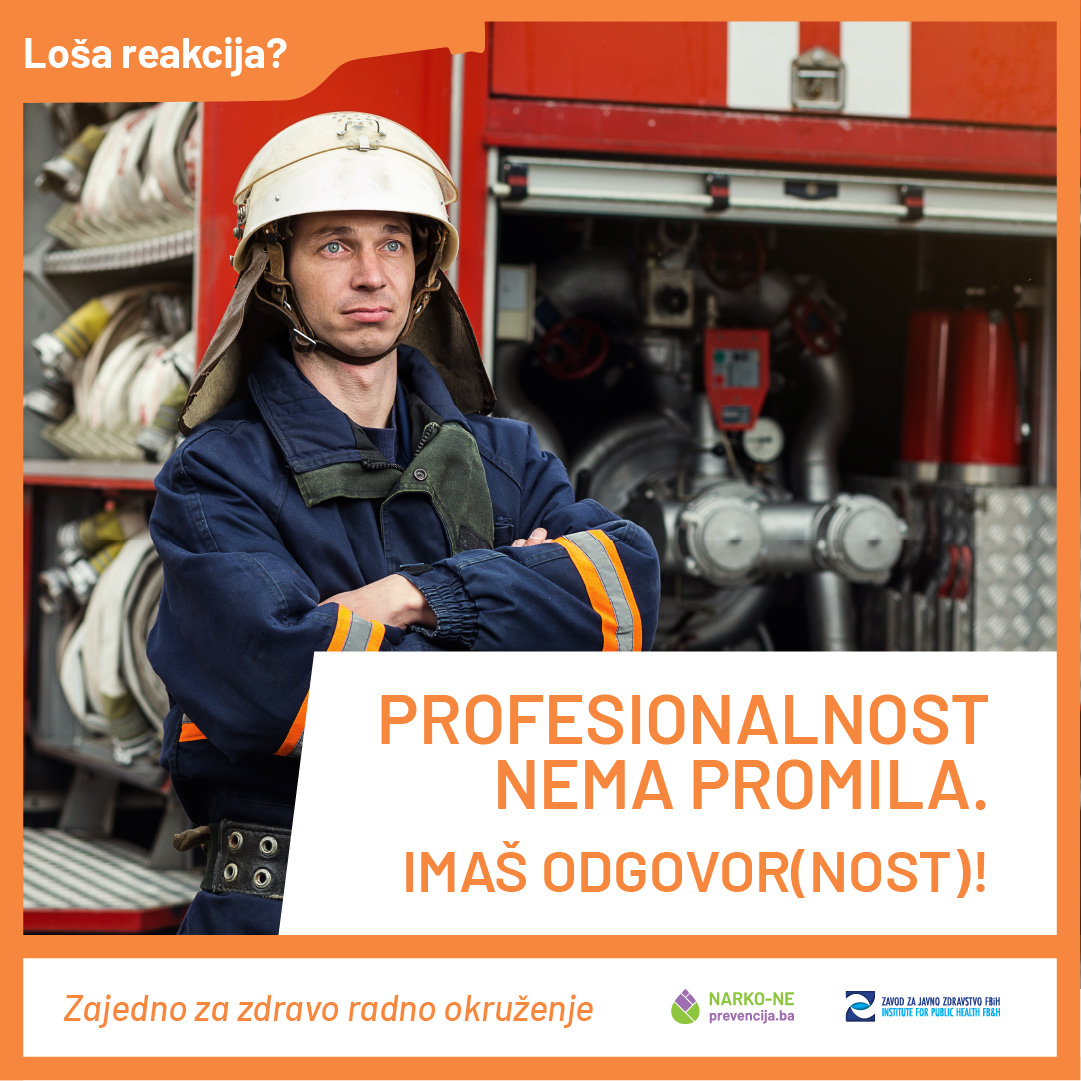
*Through the campaign “Professionalism Has No Promille. You Have Responsibility,” the Association for Addiction Prevention NARKO-NE and the Institute of Public Health of the Federation of Bosnia and Herzegovina aim to raise employers’ awareness about creating healthy work environments and to influence employees’ attitudes, norms, and behaviours regarding alcohol consumption in the workplace.
*The campaign visuals depict professions that significantly impact the health and well-being of others, which is why responsible behaviour without the use of psychoactive substances is of crucial importance. For the purposes of the campaign, only one gender is shown in certain professions for simplicity, although it clearly refers to all genders.
Ileana Šnur-Muratagić
Read more: How to Help a Colleague if You Notice They Are Misusing Alcohol in the Workplace